Why Your Business Can't Stop at SEO: The Case for AEO and GEO
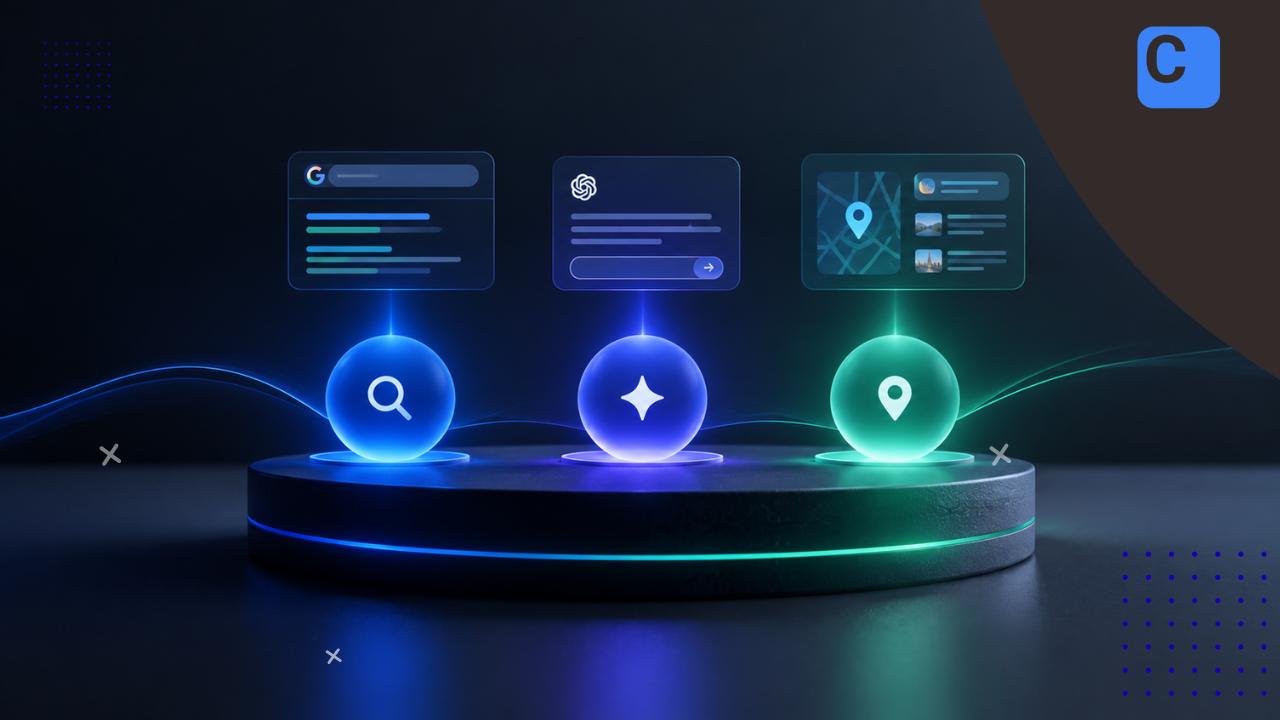
Ask a few people how they found the last restaurant, clinic or contractor they used, and the answers have started to change. Some still say 'I Googled it.' A growing number say 'I asked ChatGPT,' or 'Google just told me.' Search used to hand people a list of links and let them sort it out. Increasingly it hands them an answer, and a business only shows up in that answer if its website, and everything else written about it, was set up to be picked.
Three Acronyms, Three Different Jobs
SEO is the one most people know: getting your pages to rank in the list of results. AEO, answer engine optimization, is about being the single answer that gets pulled out of the page and shown directly, as a featured snippet, a 'People also ask' box, a voice assistant reply or the summary at the top of a Google results page. GEO, generative engine optimization, is about being named or cited when tools like ChatGPT, Gemini, Perplexity and Claude write an answer from scratch. That term came out of academic research in 2023 and has caught on quickly since.
It's worth being honest here: plenty of experienced SEOs argue that AEO and GEO are mostly good SEO under new names, and they have a point. But the behaviour these labels describe is real, and the work involved differs enough from classic ranking that it's worth planning for on its own.
Why Ranking Alone Stopped Being Enough
The core issue is clicks. Estimates of how many searches end without anyone visiting a website vary a lot by study and method, but most land well above 60 percent, and analyses from SEO tools like Ahrefs have reported click-through rates falling by roughly a third when an AI summary appears above the results. No single figure is gospel. The direction, though, is consistent: more questions are being answered before anyone reaches your site.
That changes what a good ranking is worth. Sitting at number one still matters, but if the summary above you names three competitors and not you, you've ranked well and been left out of the conversation anyway.
SEO Is Still the Foundation, Not the Casualty
None of this means abandoning SEO. AI tools mostly pull from pages that are already indexed, crawlable and trusted, so the sites that get cited tend to be the ones with strong fundamentals underneath. Skipping the basics to chase the new acronyms gets the order backwards. Solid search engine optimization is what makes the other two possible; AEO and GEO are layers added on top of it, not replacements for it.
What AEO Looks Like in Practice
Mostly it's a writing discipline. Take a real question a customer asks, use it as a heading, and answer it plainly in the first sentence or two before going into detail. Pages written that way are easy for a search engine to lift an answer from, and easier for a human to skim too. The best source for those questions isn't a keyword tool, it's your own inbox, your WhatsApp messages and the things people ask on calls. If three customers asked it this week, it belongs on the site.
FAQ sections with proper structured data help machines read those answers cleanly. One caution: Google scaled back the expandable FAQ results it shows for most sites a few years ago, so treat the markup as a way of making your content easier to parse, not as a ticket to a special display.
What GEO Asks of a Business
Generative tools don't read only your website. They assemble answers from many places: your site, review platforms, directories, news mentions, forums and whatever else describes your business. Being cited means being described consistently and credibly in more than one place. State the plain facts clearly, who you are, where you are, what you do, what it costs where you can. Put real names on articles. Publish something specific, like original numbers or a real example, instead of the same generic advice every competitor already has. Models are decent at spotting filler, and filler rarely gets quoted.
How the Site Is Built Matters More Than It Used To
There's a technical side that gets overlooked. Many AI crawlers don't run JavaScript the way a browser does, so a site that only fills in its content after the page loads can look half empty to them. Pages that are server-rendered, fast and cleanly structured get read properly. This is one reason our web development work leans on server-side rendering and clean markup by default: a site that humans find fast is usually the same site machines can read.
What This Looks Like for Businesses in Kochi and Kerala
Picture someone typing 'best dental clinic near Edappally' or 'homestay in Fort Kochi with parking' into an AI assistant. They don't get ten links. They get two or three names. For categories Kochi people search constantly, like healthcare, hospitality, coaching institutes and jewellery, being one of those names is the whole game.
A few things carry extra weight here. A complete, regularly updated Google Business Profile, with reviews that mention specific services rather than just stars, feeds both Google's answers and the AI tools that borrow from it. Your name, address and phone number should match everywhere they appear. And because many people search in Malayalam, English or a mix of both, content that covers both gives you more ways to be found. There's also the diaspora angle: a family in Dubai asking an AI assistant for a good hospital in Kochi for their parents can't walk in and compare. The answer they're given decides the shortlist.
A Sensible Order of Operations
Start with the foundation: speed, crawlability and clean structure. Then rewrite the handful of pages that matter most, service pages and your top questions, so each one answers something directly. Next, build presence beyond your own site through your business profile, directories and reviews. And finally, check your progress in a very unscientific but useful way: once a month, ask the AI tools the questions your customers ask and note whether your business gets named.
While organic visibility builds, performance marketing can hold your place in front of buyers, and a wider digital marketing plan keeps the pieces working together instead of in separate silos. One honest caveat to end on: nobody controls what ChatGPT or Gemini says, and anyone who guarantees you a citation is overselling. What you can do is make your business easy to find, easy to read and easy to trust, which improves your odds in every kind of search at once.
If you're a business in Kochi or anywhere in Kerala and want to know where you currently stand, whether that's in Google's results, in AI answers or both, Cocaimo is a digital agency based right here in Kochi, and we're happy to take a look with you.

Cocaimo Digital Agency
Digital Growth & Web Development at Cocaimo Digital Agency
Focuses on technical architectures, performance algorithms, and commercial growth playbooks for digital enterprises.
Article FAQs
Frequently asked questions related to this article's topics.
Related Engineering Playbooks
Why Small Businesses Need a High-Performance Website in 2026
Social media and Google listings are useful, but they shouldn't be the entire online presence of a small business. Here's why a fast, useful website still matters in 2026.
Cocaimo Digital Agency
What Digital Marketing Methods Does Your Business Actually Need?
Digital marketing isn't one thing, it's a set of different methods that solve different problems. Here's a plain breakdown of each one and how to know which your business actually needs.
Cocaimo Digital Agency
Why SEO Still Wins for Long-Term Organic Traffic Growth
SEO is more than keywords and blog posts. Search intent, technical performance, useful content, internal linking and conversion experience all play a role in turning organic visibility into meaningful business growth.
Cocaimo Digital Agency